Bedroom Pop to Britpop: A Winter Listening Guide to Cavetown and Blur
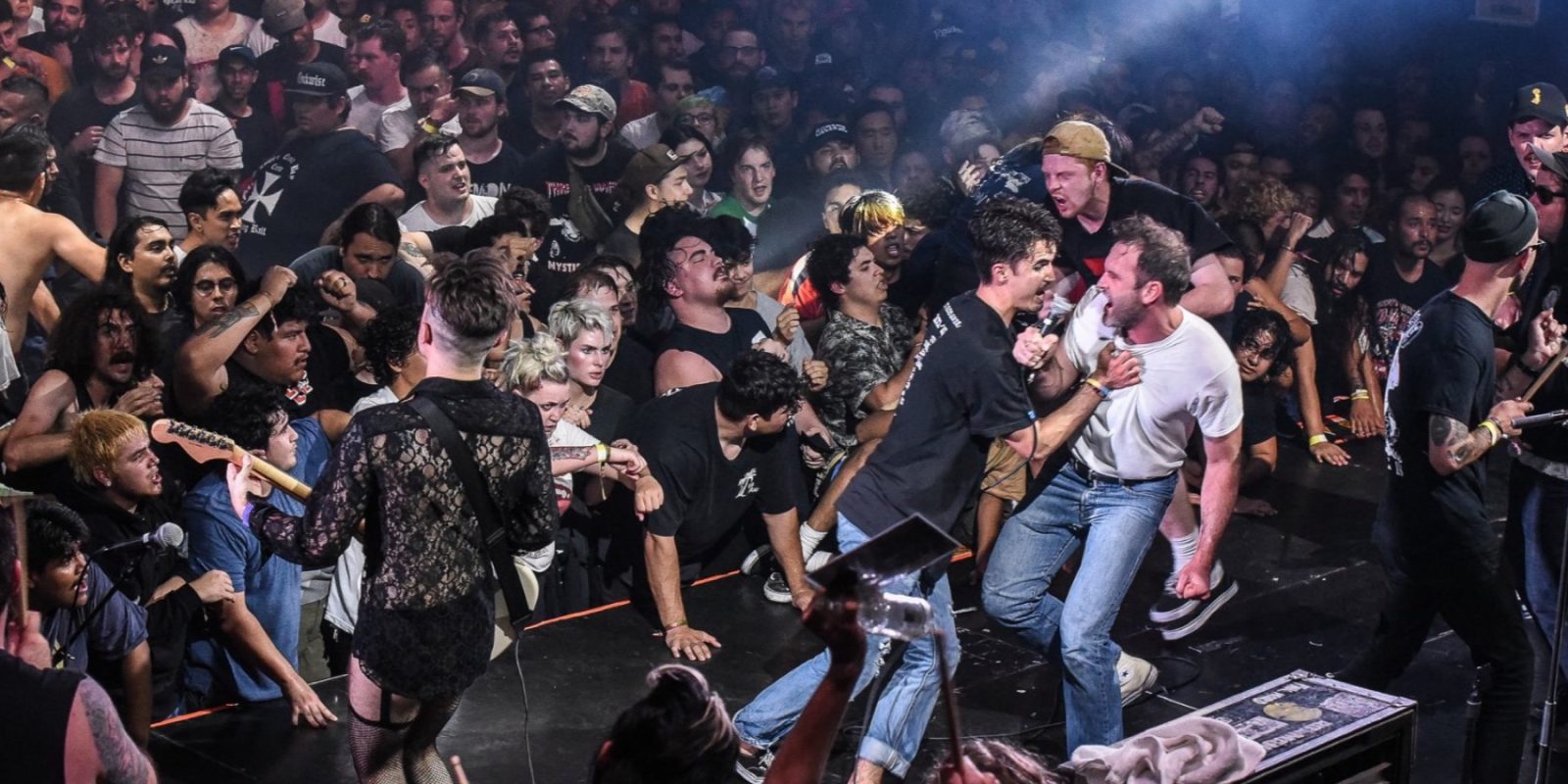
Some records sound best when it is dark by half past four. The kettle is on, the radiator ticks, and you want music that either wraps around you or wakes you up. Two acts from England cover both moods better than most: Cavetown, the ukulele-and-guitar bedroom pop project that grew out of Cambridge, and Blur, the London band that went from Britpop anthems to some of the strangest, most personal guitar records of their era.
This guide gives you a way into each one: who they are, which records to put on first, and which ones to save for the coldest nights. At the end there are two knit-pattern hoodies that fit the season as well as the playlists do.
Who is Cavetown?
Cavetown is the project of Robin Daniel Skinner, known as Robbie. Born in Oxford in December 1998 and raised in Cambridge, Robbie learned acoustic guitar from their father at the age of eight. The YouTube channel started in November 2012, the first original song went up in October 2013, and early music appeared on Bandcamp, including Everything Is Made of Clouds (2013).
The sound sits somewhere between indie pop, bedroom pop, lo-fi and indie folk, built mostly on ukulele and guitar. It is gentle without being slight: soft voices, small rooms, songs that feel like they were written at two in the morning for one person.
Where should you start with Cavetown?
If you are new, here is an easy route through the catalogue:
- Start with Lemon Boy (2018). Released on New Year's Day 2018, it is a warm way in, and the title track is a good test of whether this sound is for you.
- Then go back to Cavetown (2015). The self-titled album from November 2015 sits in the same year as "Devil Town", one of the early Cavetown songs worth knowing.
- Save Sleepyhead (2020) for a quiet night in. It came out on Sire in March 2020, and its title alone tells you when to play it.
- Put on Worm Food (2022) when you want more edge. It brings in guests including Pierce the Veil, Beabadoobee and Chloe Moriondo.
- Finish with Running with Scissors (2026). Released in January 2026 on Futures Music Group, it is the newest full-length.
Between the albums there are short releases worth a listen too: the Dear. EP (2018), the Animal Kingdom mixtape (2019), Man's Best Friend (2021) and Little Vice (2024).
There is also a reason to know the name beyond the music. The This Is Home Project raises money for LGBTQIA+ youth organisations, with a goal of at least $1 million over three years. Its first benefit show took place at Racket in New York City, with proceeds going to New Alternatives, a charity working to end homelessness for LGBTQIA+ youth.
Who are Blur?
Blur are a British rock band formed in London in 1988: singer Damon Albarn, guitarist Graham Coxon, bassist Alex James and drummer Dave Rowntree. Albarn, Coxon and Rowntree grew up in Colchester, Essex, and Coxon and Albarn were childhood friends. The band came together in December 1988 when James joined Albarn's group Circus, which then became Seymour before the four settled on Blur.
Their story has an unusual shape. They were active from 1988 to 2003, stepped away after the 2003 tour, reunited with Coxon in 2009 for a European tour, released The Magic Whip in 2015, and came back once more in 2023. Nine studio albums span all of it, and the band's studio albums, in order make a good map if you want to hear them from first to last.
Which Blur record suits a cold night?
Blur changed so much from one record to the next that the right album depends on your mood:
- For energy: Parklife (1994). The heart of the Britpop era, alongside Modern Life Is Rubbish (1993) and The Great Escape (1995). This is the one for a bright, frosty morning walk.
- For noise: Blur (1997). The band leaned into lo-fi American indie rock here. It was their third UK number-one album, and "Song 2" brought them mainstream success in the US. Turn it up, then go back to the warmth.
- For the long night: 13 (1999). Electronic and gospel elements, and more personal lyrics from Albarn. This is a record for headphones and a dark room.
- For something different: Think Tank (2003). Coxon left early in the sessions, and Blur carried on as a trio with Albarn on guitar.
- For the return: The Magic Whip (2015) and The Ballad of Darren (2023). Two records from the band's later years, both worth hearing after the earlier albums.
If you only have time for one, start with whichever matches the weather outside your window. And if you want the whole picture, Leisure (1991), the debut, shows where it all began, soaking up the Madchester and shoegaze sounds around it.
Two knit hoodies for the same season
Both acts have a holiday design that looks like a classic knitted jumper, and both suit the listening above.
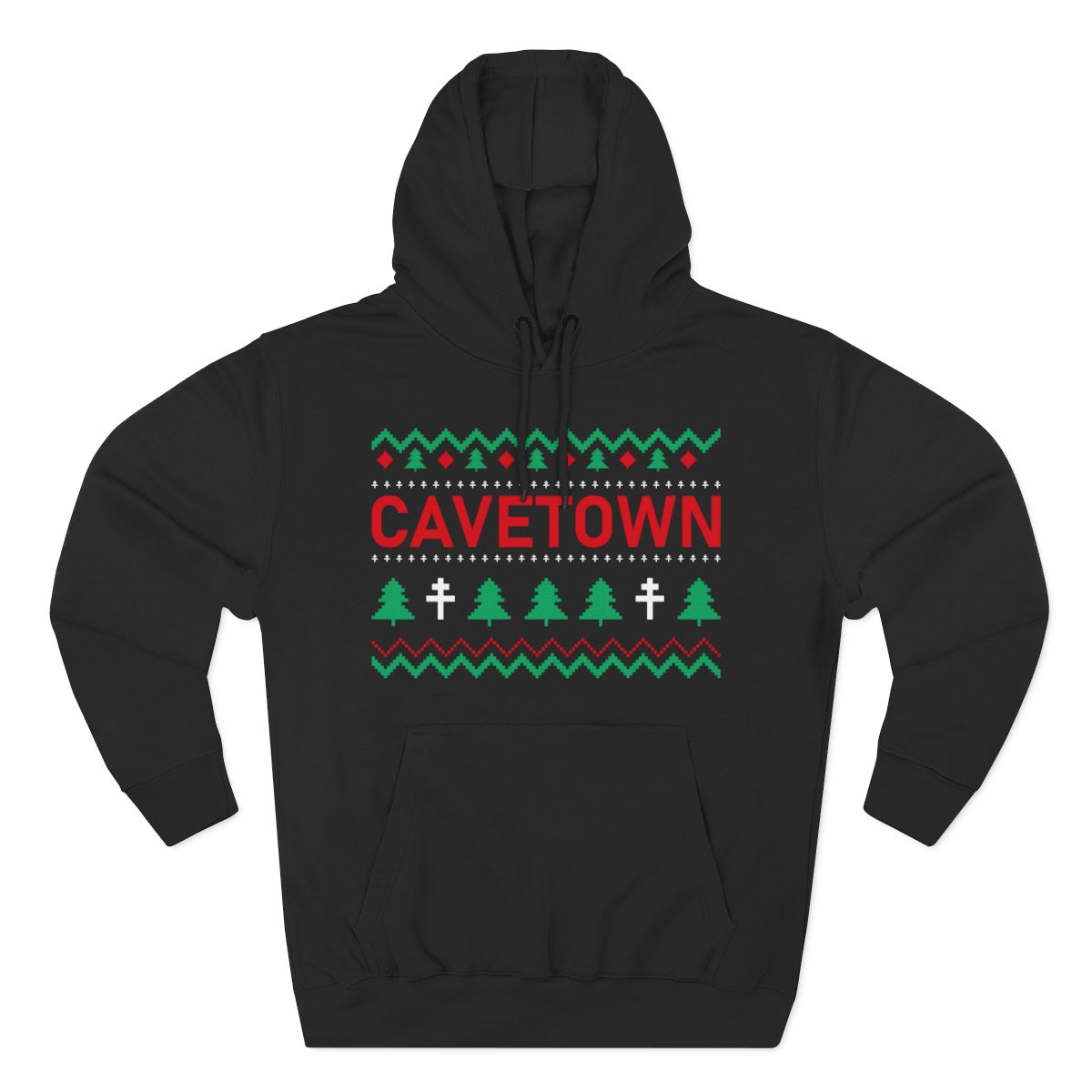
The Cavetown version puts the name in big red capitals between rows of pixel pine trees and zigzag borders. It has the same cosy, homemade feel as the music, which makes the Cavetown Christmas Knit fleece hoodie a natural match for a Sleepyhead evening. The design also comes as a crewneck sweatshirt and in youth sizes, which helps if you are dressing a younger listener too.
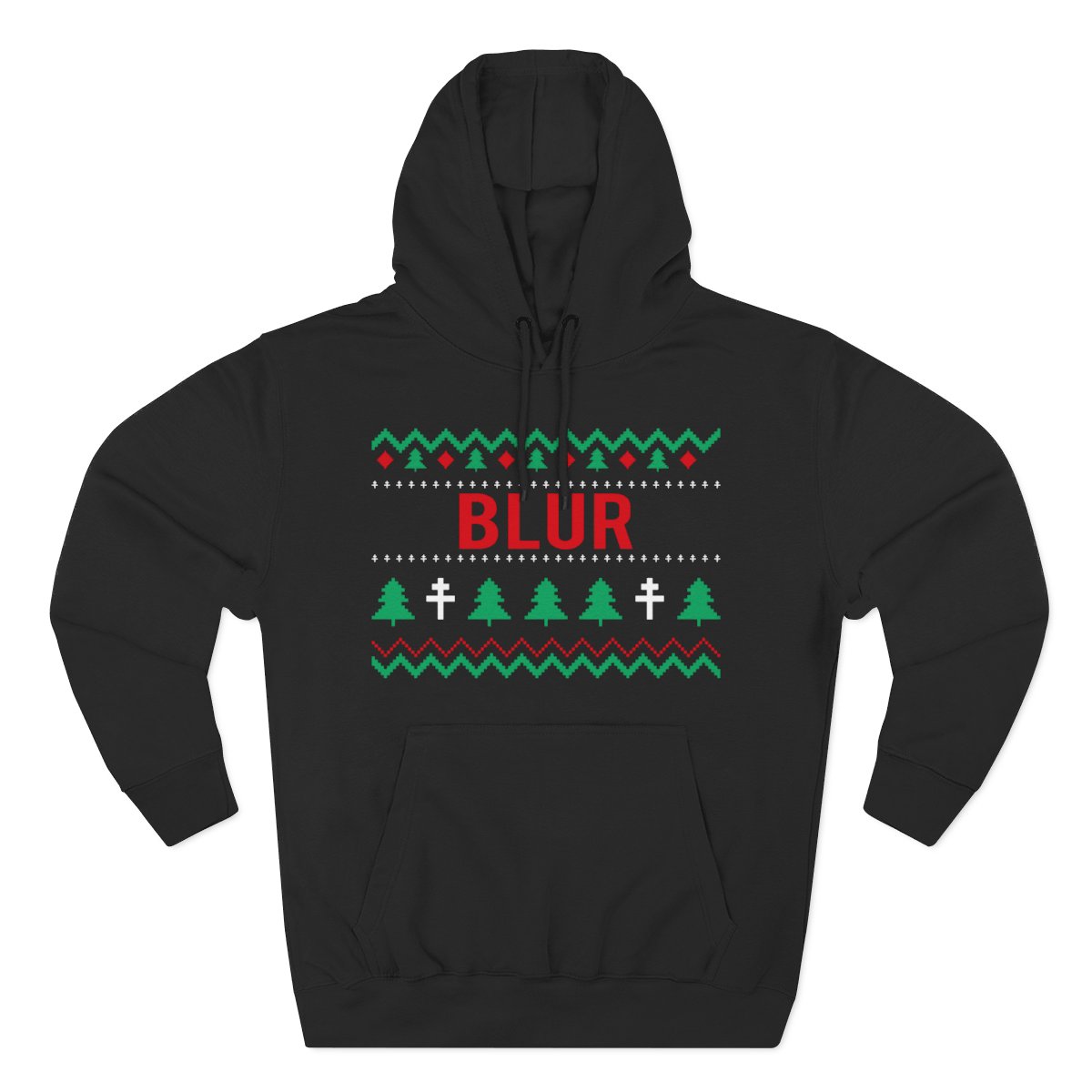
The Blur version sets the band name in red capitals inside a festive pattern of green zigzags, red diamonds and trees. It reads louder, a little more Parklife than 13, and it sits well over a shirt for a pub night or a winter walk. It too comes as a three-panel fleece hoodie, a crewneck and youth sizes.
Who suits which? A simple rule:
- The quiet one who plays music softly late at night: the Cavetown knit.
- The one who still sings "Song 2" at full volume: the Blur knit.
- The household that argues over the playlist: one of each, and take turns with the speaker.
The short version
Cavetown and Blur come from very different corners of English guitar music, one built on ukulele and small rooms, the other on four people who kept reinventing a band over more than three decades. Put on Lemon Boy when you want comfort, 13 when you want depth, Parklife when you need waking up, and let the knit hoodies keep you warm while you work through the rest.